Understanding Chinese Used Lathe Machines: A Comprehensive Guide to Their Essential Components and Functions
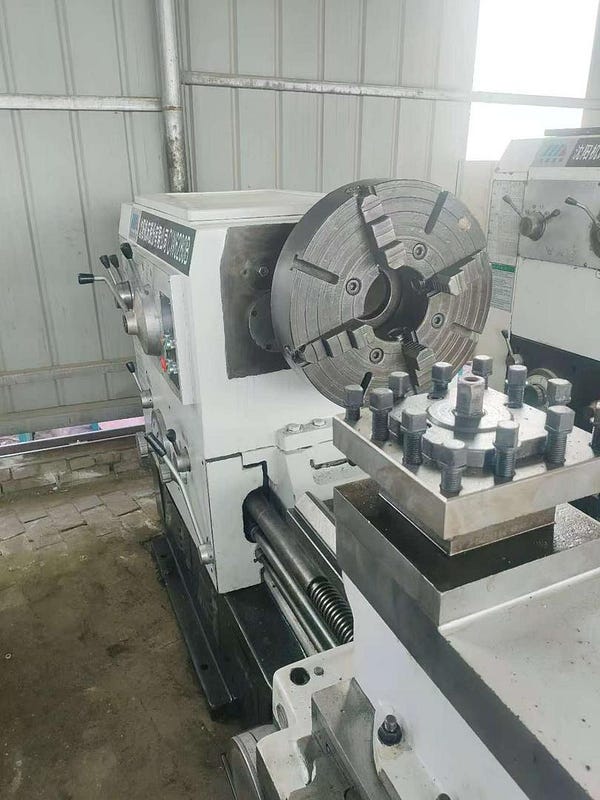
Lathe machines are indispensable tools in the Chinese Used metalworking machines industry, renowned for their ability to perform a wide range of machining operations with unparalleled versatility. These machines are essential for tasks such as turning, facing, drilling, threading, and more, making them a cornerstone of any workshop. This article delves into the key components of lathe machines, providing a detailed explanation of their functions and significance in ensuring the machine’s smooth operation. By understanding these components, operators can optimize their use of manual lathe machines, enhance productivity, and ensure the longevity of their equipment.
Introduction
Lathe machines, often referred to as the “mother of all machines,” are fundamental to the light metalworking machines process. They operate by rotating a workpiece around a fixed axis while a cutting tool shapes the material into the desired form. The effectiveness of a lathe machine relies heavily on its various components, each designed to perform specific functions that contribute to the machine’s overall performance. Whether working with metal, wood, or plastic, understanding the anatomy of a lathe machine is crucial for achieving precision in machining operations, especially when using Chinese Used CNC lathe machines or conventional machining machines.
The Bed: The Structural Backbone of the Lathe
The bed of a lathe machine serves as the structural backbone, providing a sturdy and stable base upon which all other components are mounted. Constructed from materials like cast iron or steel, the bed is designed to absorb vibrations and withstand the stresses generated during machining. This stability is crucial for maintaining the accuracy and consistency of the machining process. The bed features precisely machined guideways, often referred to as ways, which allow the smooth movement of the carriage and tailstock along its length. These guideways are integral to the lathe’s ability to perform precise longitudinal movements, ensuring that the tool remains aligned with the workpiece throughout the operation.
Headstock: The Powerhouse of the Lathe
The headstock is a critical component located at one end of the lathe bed. It houses the spindle, which is the part that rotates the workpiece. The headstock also contains the lathe’s drive mechanism, which typically includes an electric motor, belts, pulleys, and gears. These elements work together to transmit power from the motor to the spindle, allowing it to rotate at variable speeds. The ability to adjust spindle speed is essential for accommodating different materials and machining operations, such as turning, threading, and drilling. The headstock is also equipped with a chuck, which holds the workpiece securely in place during machining. This is especially important in high-precision applications, like those performed with a CNC machining center or automatic machining center.
Tailstock: Supporting and Stabilizing the Workpiece
The tailstock is positioned on the opposite end of the lathe bed from the headstock. Its primary function is to provide support to the free end of the workpiece, ensuring that it remains stable and aligned during machining. The tailstock can be moved along the bed to accommodate workpieces of varying lengths and can be locked in place once positioned. In addition to supporting the workpiece, the tailstock can hold tools such as drills, reamers, and centers. This versatility allows the tailstock to be used for a variety of operations, including drilling, boring, and reaming, in conjunction with the turning process. The tailstock’s stability is especially important when machining long parts using heavy-duty lathes or Chinese Used medium-duty lathes.
Carriage: The Engine of Tool Movement
The carriage is a vital component that moves along the lathe bed, carrying the tool post and the cutting tool. It is responsible for the precise movement of the cutting tool relative to the workpiece, enabling accurate material removal. The carriage consists of several subcomponents, each with a specific function:
The saddle directly slides along the bed’s guideways and supports the cross-slide and compound rest. The cross-slide, mounted on the saddle, enables movement perpendicular to the workpiece — essential for facing operations. The compound rest, attached to the cross-slide, can be swiveled to various angles for threading or taper turning. The apron, located at the front of the carriage, houses controls for longitudinal movement and the feed mechanism, ensuring automatic tool feed during cutting. These mechanisms are crucial for operations involving CNC milling machines and CNC milling centers, which demand high levels of precision and repeatability.
Tool Post: Securing and Positioning the Cutting Tool
The tool post is a critical component mounted on the carriage, designed to hold the cutting tool securely in place. It allows the operator to adjust the position and angle of the tool to achieve the desired cutting action. The tool post can be rotated, enabling the tool to be set at various angles for different machining operations. In more advanced setups, such as automatic lathe machines, tool posts can be designed to accommodate multiple tools for rapid switching and continuous production. This feature enhances both flexibility and efficiency, particularly in automated systems used in CNC manufacturing machines.
Spindle: The Rotating Axis and Heart of the Lathe
The spindle is the heart of the lathe, responsible for rotating the workpiece during machining operations. Located in the headstock, the spindle is driven by the lathe’s motor and is capable of rotating at various speeds. The speed at which the spindle rotates is adjustable, allowing the operator to tailor the machining process to the specific material and operation being performed. The spindle’s rotation is what enables the lathe to perform turning operations, shaping the workpiece by removing material as it spins. Machines like the Chinese Used light-duty lathe or medium metalworking machines rely on high spindle precision for delicate and detailed tasks.
Feed Rod and Lead Screw: Ensuring Precision and Accuracy
The feed rod and lead screw are crucial components responsible for the precise movement of the carriage and cutting tool along the lathe bed.
The feed rod drives the carriage along the bed during cutting operations, ensuring consistent and uniform material removal. It is typically used for operations where the carriage needs to move in a straight line parallel to the workpiece axis. The lead screw is essential for threading operations. It controls the carriage’s movement during threading, ensuring that the cutting tool follows the correct pitch and leads to accurate thread production. The lead screw is synchronized with the spindle, allowing the cutting tool to cut threads that are perfectly aligned with the workpiece’s rotation. These mechanisms are often enhanced in Chinese Used heavy metalworking machines designed for demanding threading and contouring applications.
Chuck: The Workpiece Clamping Device
The chuck is a clamping device attached to the spindle, designed to hold the workpiece securely during machining. There are several types of chucks available, each suited to different applications.
The three-jaw chuck is the most common, ideal for holding round or hexagonal workpieces in light-duty lathes or CNC milling centers. The four-jaw chuck has independently adjustable jaws, making it suitable for irregularly shaped workpieces. The collet chuck is preferred for precision work on small, cylindrical parts, offering superior accuracy and repeatability — vital in automatic machining centers or precision manual lathe machines. The correct selection of a chuck ensures stability, safety, and superior surface finishes.
Conclusion
Understanding the key components of a lathe machine is essential for anyone involved in medium metalworking machines or conventional machining machines. Each component, from the bed to the chuck, plays a vital role in ensuring the lathe operates smoothly and efficiently. By familiarizing yourself with these components, you can better maintain and operate your lathe, ensuring it remains a valuable asset in your workshop.
At Mudar-M Metalworking Machine Tools Trading, we pride ourselves on offering top-notch Chinese Used metalworking machines and related equipment. Our decades of experience and dedicated team ensure that we provide high-quality machinery that enhances industrial efficiency globally. Whether you’re in search of CNC manufacturing machines, manual lathe machines, or any type of automatic machining center, we provide tailored solutions to meet your needs.
Our inventory includes a wide variety of machinery such as boring machines, gear shapers, and vertical turret lathes. We are proud to support industries across regions — from the bustling zones of Poland to Bulgaria, Germany, and Italy — delivering light metalworking machines, heavy-duty lathes, CNC lathe machines, and more.
We are proud to serve a broad spectrum of industries, from automotive to aerospace and beyond. Our machinery supports professionals across the globe, from the bustling industrial zones of Poland to the picturesque environments of Bulgaria, and from Germany’s industrial regions to Italy’s historic avenues.
With our rich experience and a dedicated team, we excel in delivering superior metal shop tools that boost industrial operations worldwide. Whether you require used drilling machines, lathes, gear hobbers, presses, milling machines, grinding machines, or other metalworking gear, we provide tailored solutions to meet your needs.
Understanding the need for effective communication, we offer multilingual services to ensure smooth interactions with clients fluent in Polish, Bulgarian, Italian, German, English, French, Spanish, Romanian, Ukrainian, and other languages.
Visit our website to discover more about our offerings and how we can meet your metalworking needs. For inquiries, you can reach us via email.


Comments
Post a Comment